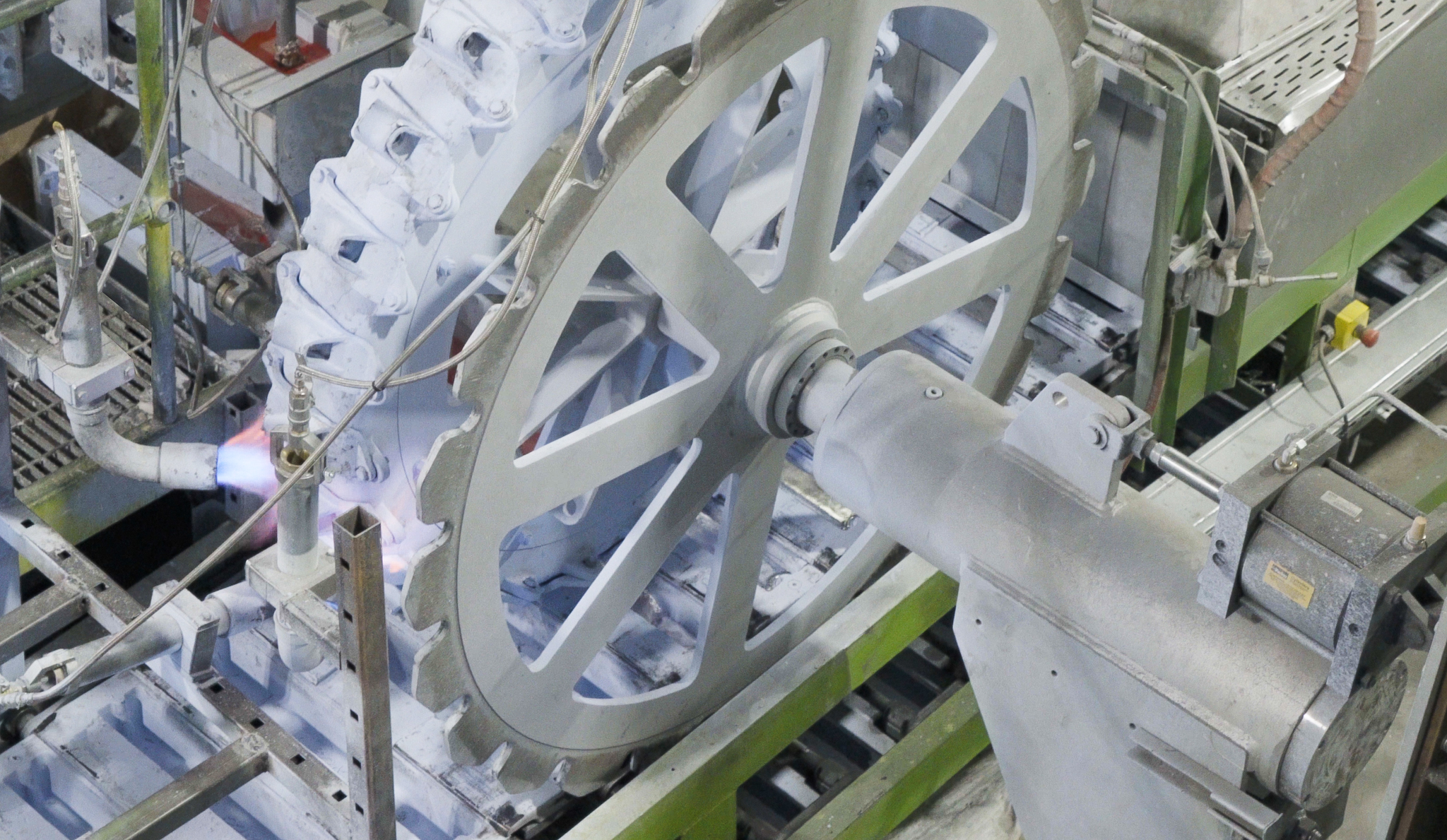
Improving Ingot Quality with the Storvik Casting Wheel
Table of content
Key Points
-
Improved Operator Safety
Eliminates manual skimming operations and reduces personnel exposure to molten metal during casting.
-
Higher Casting Quality
Optimized metal flow helps reduce dross and oxide contamination, supporting cleaner ingots and improved surface quality.
-
Increased Reliability
Integrated tilting functionality helps prevent freezing during stoppages, supporting stable operation and reduced downtime.
Cast Products
16.11.2026
Key Points
-
Improved Operator Safety
Eliminates manual skimming operations and reduces personnel exposure to molten metal during casting.
-
Higher Casting Quality
Optimized metal flow helps reduce dross and oxide contamination, supporting cleaner ingots and improved surface quality.
-
Increased Reliability
Integrated tilting functionality helps prevent freezing during stoppages, supporting stable operation and reduced downtime.
In aluminium casting operations, maintaining consistent metal quality while ensuring safe working conditions can be a significant challenge. Oxides and dross generated throughout the molten metal handling process can affect ingot quality, while manual skimming operations can expose operators to unnecessary risks. At the same time, casting systems must maintain stable production and avoid disruptions that impact efficiency and product consistency. Adding a skimming robot increases both CAPEX and OPEX without addressing the root cause of the problem.
Storvik developed its proprietary Casting Wheel as part of a broader approach to molten metal handling. By combining process knowledge, flow control, filtration, and equipment design, the objective is not only to improve casting performance, but to deliver cleaner metal, safer operations, and more consistent ingot quality.
The Challenge
Molten aluminium moving from the furnace to the casting line can carry dross and oxides that negatively affect ingot quality. Traditional casting systems often require manual skimming to remove contaminants before casting, creating additional work and exposing operators to hot metal and potentially hazardous working conditions.
Another challenge arises when casting operations are interrupted. If molten metal remains in the casting equipment during an unexpected stop, freezing can occur, creating production delays and increasing maintenance requirements.
The challenge is therefore not only about transporting molten metal. It is about ensuring clean metal flow, maintaining product quality, improving operator safety, and supporting reliable operation throughout the casting process.
Our Approach
The Storvik Casting Wheel was developed through extensive evaluations of complete casting processes and close collaboration with casthouse operators. Rather than viewing the wheel as a standalone product, Storvik considers it one component within an integrated molten metal handling system designed to deliver clean and stable metal flow to the moulds.
Depending on the operation, this system may include molten metal treatment, degassing, ceramic foam filtration, flow regulation, temperature management, launder design, and casting equipment optimised to work together. The goal is to minimise turbulence, reduce oxidation, and establish stable casting conditions throughout the process. Adding a skimming robot increases both CAPEX and OPEX without addressing the root cause of the problem.
Furthermore, in-line metal degassing (hydrogen removal) has a direct impact on the solidified ingot structure. Hydrogen trapped within the ingot can lead to microcrack formation and promote the entrapment of other particles and inclusions. With today’s increasingly demanding ingot quality requirements, this is an often-overlooked parameter in traditional casting line designs.
Ultimately, investing in proper in-line metal treatment and filtration addresses the root cause rather than adding equipment to compensate for the consequences.
Within this system, the Casting Wheel plays an important role by optimising metal flow from the furnace to the casting line while minimising the introduction of dross and oxides into the final product. By improving metal handling throughout the casting process, customers can eliminate manual/robotic skimming operations and create a safer working environment for operators.
To further improve operational reliability, the Casting Wheel incorporates an integrated tilting function. If the casting line stops, the wheel can be tilted to prevent metal from freezing inside the system, helping maintain equipment availability and reducing the risk of production interruptions.
Storvik also supports customers with complete casting solutions, including drain pans, consumables, retrofit installations, engineering services, and process evaluations tailored to individual plant requirements.
Our Outcome
The result is a safer, cleaner, and more reliable casting operation.
By eliminating manual/robotic skimming, customers can reduce operator exposure to molten metal while improving workplace safety. Improved metal flow control helps reduce dross carryover and oxide contamination, contributing to better ingot surface quality and more consistent casting results.
At facilities such as CASS in California, Storvik Casting Wheels have replaced lower-performing systems and delivered measurable improvements in dross reduction, surface quality, and operational reliability.
These improvements are achieved not through a single equipment upgrade alone, but through a holistic approach to the molten metal handling process. When metal treatment, flow control, filtration, mould design, and casting equipment function together as an integrated system, operators can significantly reduce dross formation and, in many cases, eliminate the need for manual skimming altogether.
Rather than focusing solely on equipment replacement, Storvik combines process knowledge, operational experience, and engineering expertise to improve the entire casting operation. The outcome is higher product quality, improved safety, increased uptime, and a more efficient cast house process.


